Radu Conea, kinetotherapist and P-DTR therapist in Cluj
We don't treat symptoms. We look for the cause of the pain, often an old trauma, and we treat it with P-DTR and kinetotherapy.
- Rated 5.0 on Google, from more than 50 reviews
- 260 P-DTR sessions in 2025
- More than 10 years in the field
Sound familiar?
If at least two of the situations below sound like you, you're in the right place:
- You've been in pain for years and you've come to think that's normal.
- You've tried massage, creams and stretching, and the pain comes back after a few weeks.
- You got the same exercises as everyone else, without anyone testing you.
- You were told to “strengthen your back”, and it still hurts.
- You do sport and an old injury is holding you back.
What people say (reviews translated from Romanian)
“For more than 5 years I had been dealing with back pain almost constantly. […] I wrote this review 3 months after finishing the treatment and I haven't had any pain at all since.”
“I couldn't lift my arm all the way, and any movement caused me pain. […] I felt safe throughout the whole recovery process.”
“I'm generally a sceptical person. […] It turned out that the shoulder problem comes from some ankle sprains.”
More than 50 reviews on Google, rated 5.0.
How we work
Biomechanical assessment
About an hour. We listen to your story and test the muscles, one by one.
We find the cause
The body remembers old traumas and “switches off” some muscles. Meaning they stop working, and others pull in their place until they start to hurt.
We treat with P-DTR and kinetotherapy
On a programme we choose together. We guide you and suggest options, and you choose.
We retest
On the spot, so you see what changed, and along the way, so we see how you're progressing.

Where it started
Radu went through it too: an L4-L5 disc herniation and sciatica flare-ups. The same exercises as five other people with herniations in other places. They didn't help.
The pain went away when someone looked for its cause. Since then, for almost 10 years, no more back pain.
That's why, here, every person is tested before getting any exercise.
What we do

Kinetotherapy and P-DTR
For back pain, disc herniation, shoulder, hip, knee and ankle. We look for the cause and treat it, on a programme made for you.
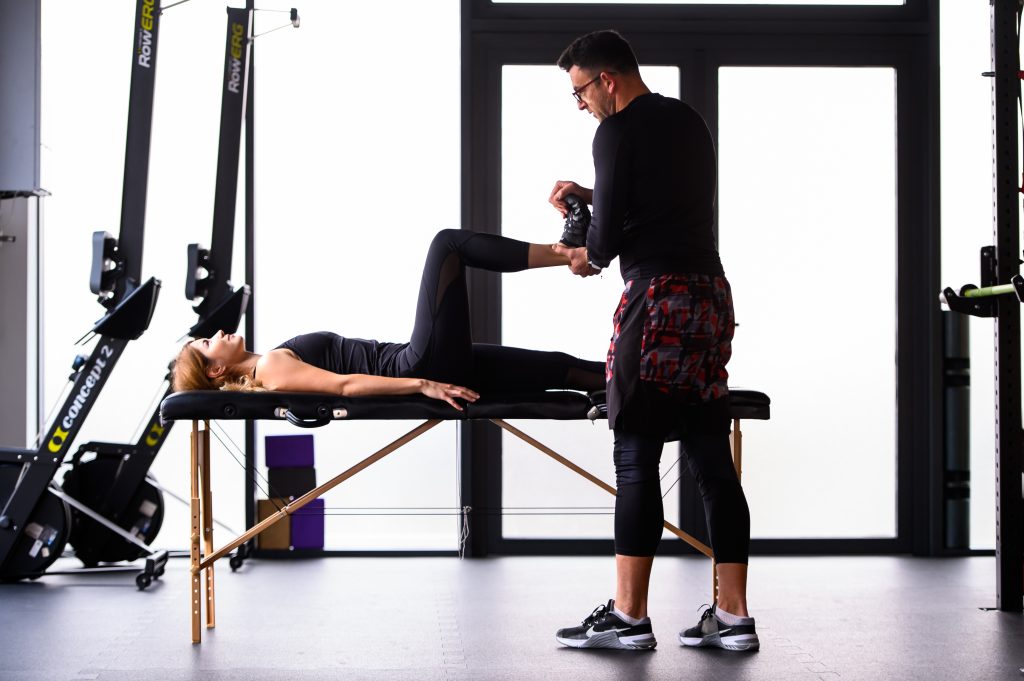
Personal training
After recovery, we train you with weights, based on the tests. We know where you're starting from and how much you can lift.
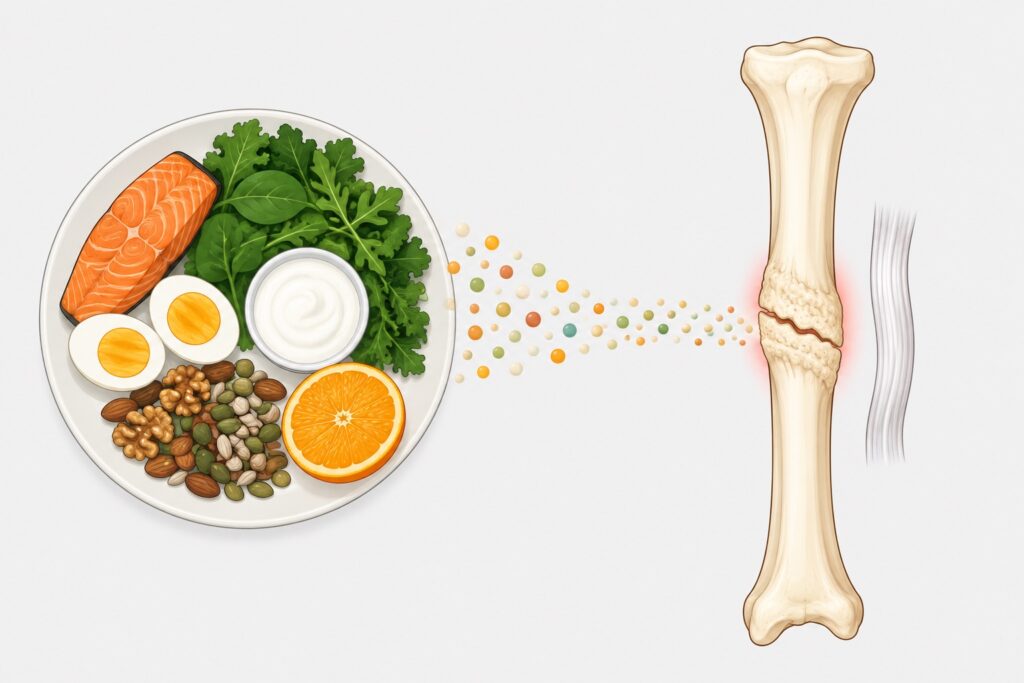
Nutrition
The body rebuilds tissue from what you eat. We adjust your diet for recovery, pain, weight loss or muscle gain.
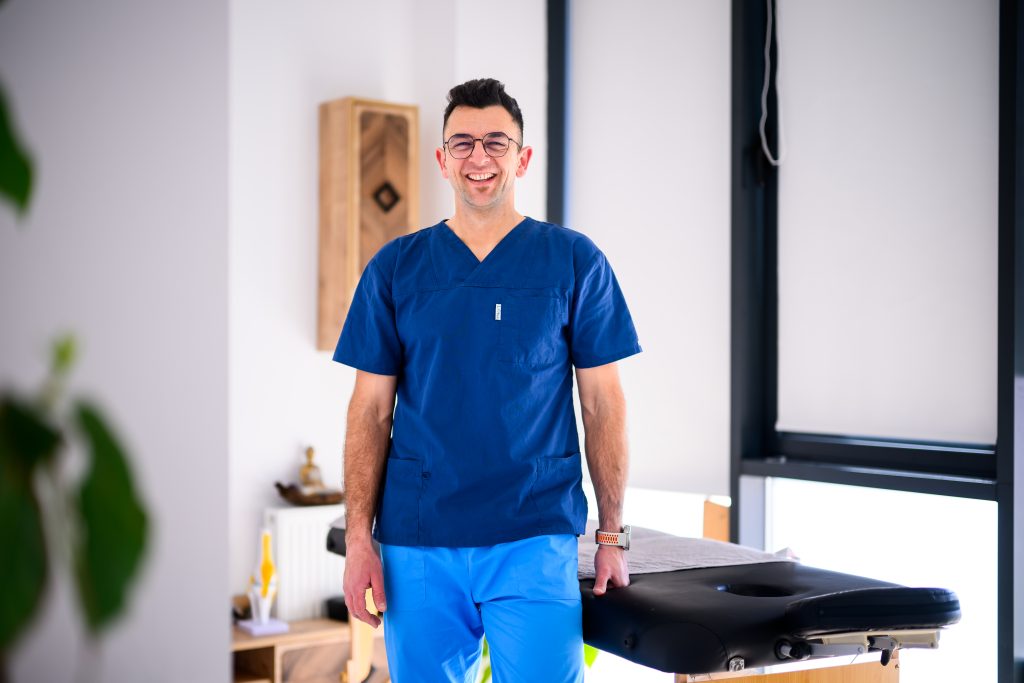
Who treats you
More than 10 years in the field, P-DTR therapist, one of about 5,000 in the world, fitness instructor and sports conditioning coach.
- Faculty of Physical Education and Sport, UBB Cluj, Kinetotherapy and Special Motricity
- Master's degree in “Nutrition and Quality of Life”, UMF Cluj-Napoca
- Full P-DTR course, all 6 modules, with Prof. Dr. Jose Palomar
All of Radu's training
- Certified NeuroKinetic Therapy therapist, levels I, II and III
- The “Personal trainer” courses, levels 1 and 2, and “Nutrition technician”, at Fitness Scandinavia
- The “Postural Alignment Romania” course
- The “Myofascial release” and “Trigger Point Therapy” courses, at Physio Sport Academy
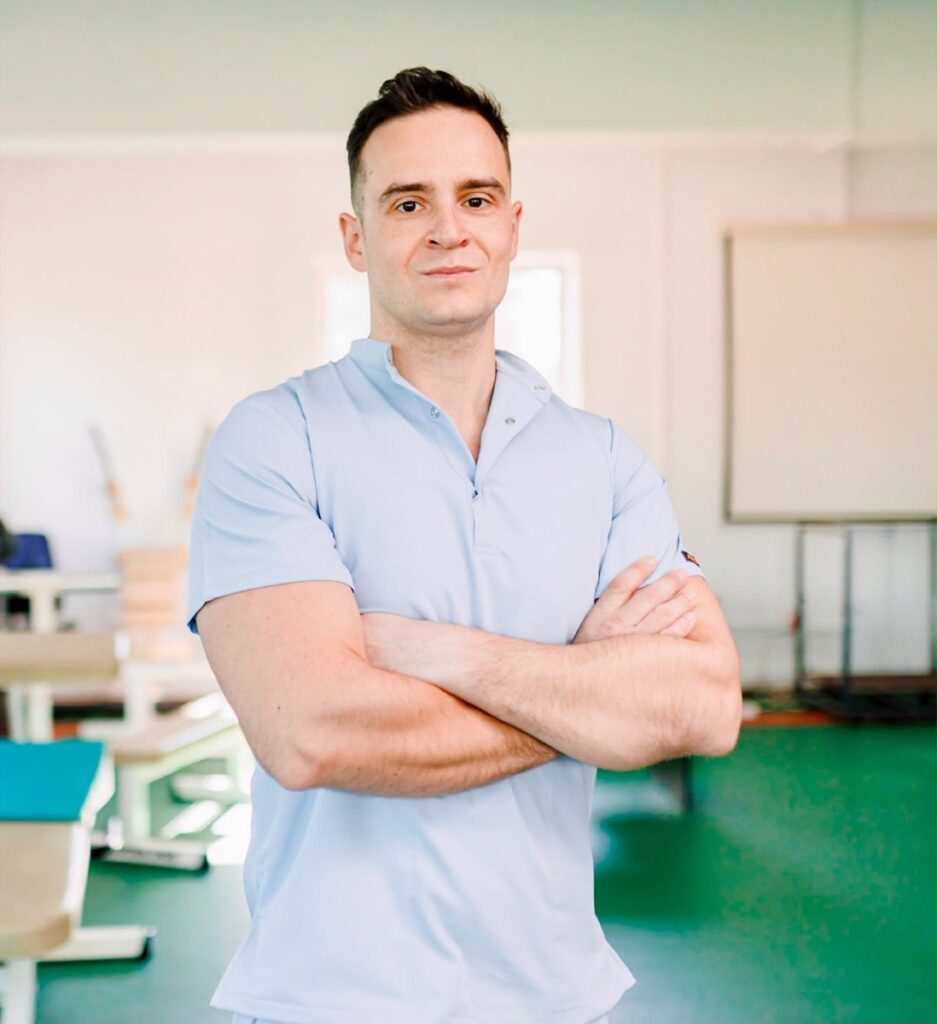
4 years in the field. Therapeutic massage, dry needling, Maitland, manual lymphatic drainage and Global Active Stretching. Currently training in P-DTR.
More about Sorin
Licensed physiotherapist, with 4 years in the field.
Many cases have passed through his hands, very different from one another.
First, he listens.
Then he works out what hurts and looks for the cause, together with you.
The goal is for you to live better, with less pain.
Specialisations:
- Therapeutic massage: hands-on work on the muscles and the tissues around them.
- Dry needling (Top 30): releases the painful knots in the muscles.
- Maitland Concept, level 3: mobilises stiff joints.
- Manual lymphatic drainage: reduces swelling after surgery and injuries.
- Global Active Stretching: lengthens the whole chain of muscles, not just one.
He is currently training in neuro-kinetotherapy, in P-DTR.
It's the therapy through which Fitway has become known for its results.
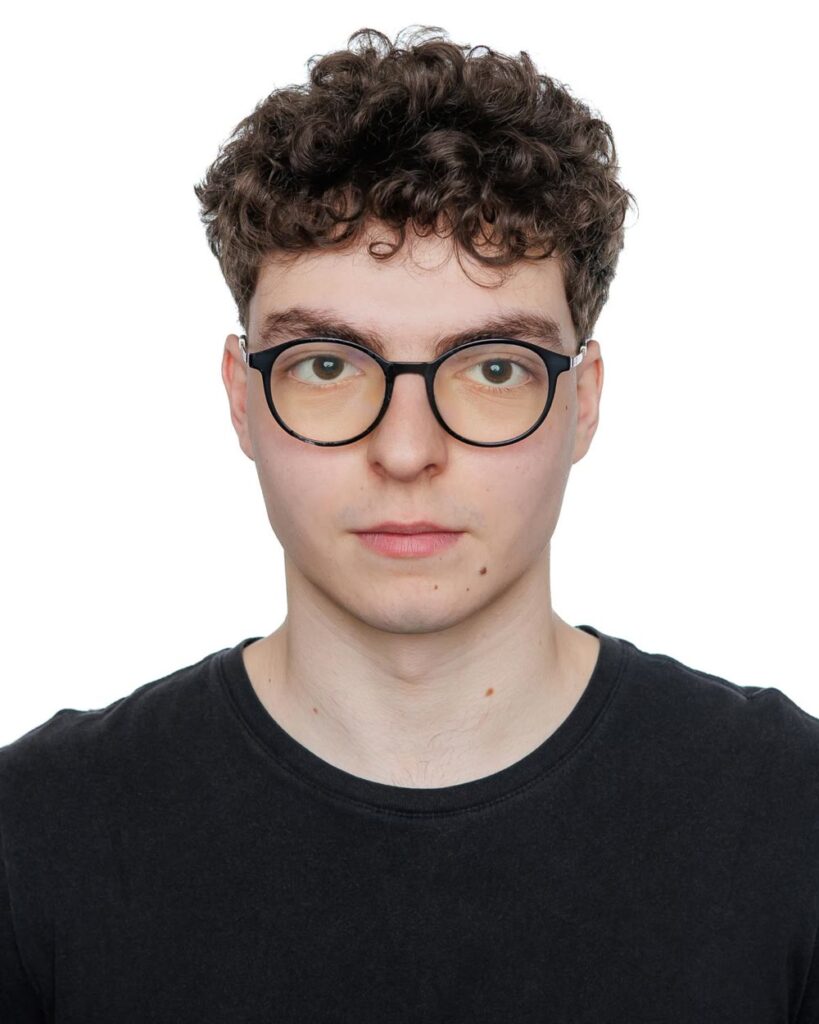
Medical rehabilitation, postural re-education, personal training and prevention. 12 years of competitive sport.
More about Dani
Kinetotherapist, working with people of all ages.
Specialisations: medical rehabilitation, postural re-education, personal training and the prevention of musculoskeletal conditions.
Where it started: his mother went through three operations on her lower spine.
Dani grew up around her recoveries.
He saw the suffering, but also the progress.
And he understood how much the right help, at the right time, matters.
He did 12 years of competitive sport.
That's where he learned the balance between effort, recovery and discipline.
His years in the taekwondo gym taught him self-control, respect for the body and consistency.
He now builds his work with people on them.
He doesn't believe in rigid perfection.
He too has days with a fast-food meal or a glass of wine with friends.
What matters is knowing what you choose and coming back to the habits that are good for you.
An active but balanced lifestyle keeps body and mind healthy in the long run.
He believes you can learn something from every person, if you know how to listen.
The conversations during sessions aren't just small talk.
They show him other ways of looking at life, sometimes surprising, sometimes simply human.
They make him a better therapist and a better person.
He adapts every programme to each person's needs and goals.
Questions
I've been to other therapists and they didn't help me. What's different here?
Pain is an effect.
If you only treat the effect, the pain comes back.
That's why, at the assessment, we don't just look at where it hurts. We have a battery of tests, for mobility and muscle neurology, muscle by muscle. They show us why the pain appears.
Often the cause is an old trauma, even a forgotten one. A fall, a sprain.
The body remembers the spot and “switches off” some muscles. Others pull in their place until they start to hurt.
That's how we find the main cause. And that's where we treat it, with P-DTR and kinetotherapy.
Then we retest on the spot, so you can see for yourself what has changed.
Read more: What P-DTR is, explained in plain language →
What does an old fall have to do with the pain I have now?
The body remembers where it was hit and wants to protect that spot.
On impact, the body makes a withdrawal reflex. The receptors there can stay dysfunctional and keep signalling, non-stop, that there's a problem there.
To protect the spot, the central nervous system “switches off” some muscles. Others pull in their place, for years, until they start to hurt.
That's why a fall from 20 years ago can hurt today, somewhere else.
Tudor came in with shoulder pain. At the assessment, the problem turned out to come from some ankle sprains.
At the assessment we show you the link, on your own body.
Read more: The shoulder that won't lift, and where shoulder pain comes from (in Romanian) →
Can I come for a single session and decide after?
You can start with the assessment. It takes about an hour and shows us where the pain comes from.
A single therapy session, on its own, has no way of knowing what to treat.
That's why we work in programmes.
During kinetotherapy we see you move. We find out where it hurts, when it hurts and which movement isn't working. We note everything down.
And at the next P-DTR session we treat exactly what we found there.
Therapy without kinetotherapy would be guesswork. This way, each one feeds the other.
A programme takes about a month and a half to two months.
See the programmes: Plans and Prices →
And after I finish, does it come back?
It depends on the situation. We don't promise it will never hurt again.
Flare-ups come back when their cause doesn't change. If you only treat the spot that hurts, the pain fades for a while, then returns.
That's why we look for the cause and treat it there.
With some problems, like a large disc herniation, more than one programme is needed.
After recovery, many people carry on training in the gym, to keep it that way.
Radu had an L4-L5 disc herniation himself, with flare-ups for years.
His story, including what didn't work: My L4-L5 disc herniation (in Romanian) →
It's far from me.
People have come from Reghin, Târgu Mureș, Sibiu and Oradea.
The harder something is to reach, the more you want it.
First you come in for the assessment, about an hour. There you find out where the pain comes from and which programme suits you.
We're at Str. Alexandru Roșca nr. 5, in Cluj-Napoca.
Map and phone number: Contact →
How much does it cost?
The biomechanical assessment costs 250 RON and takes about an hour.
We only recommend a programme after the assessment. Without tests, we wouldn't know what to treat or how much you need.
If you only need kinetotherapy, 8 sessions cost 1,120 RON, which is 140 RON per session.
When P-DTR is needed too, recovery programmes start at 3,000 RON, with the Essential Programme: 4 P-DTR sessions and 6 kinetotherapy sessions.
All prices: Plans and Prices →
0757 693 543 · Str. Alexandru Roșca nr. 5, Cluj-Napoca